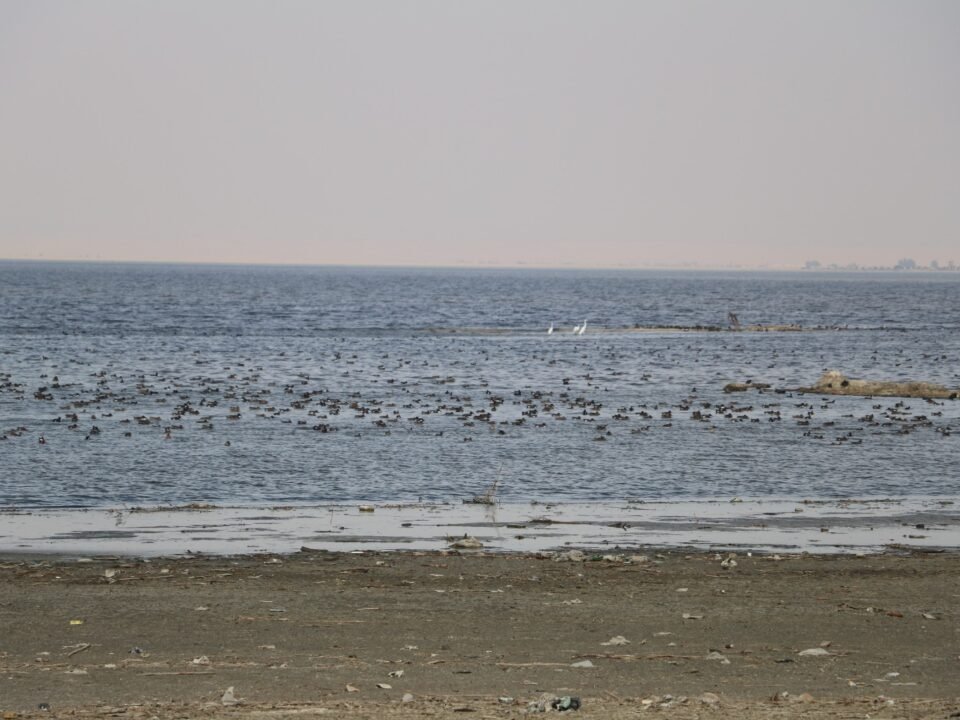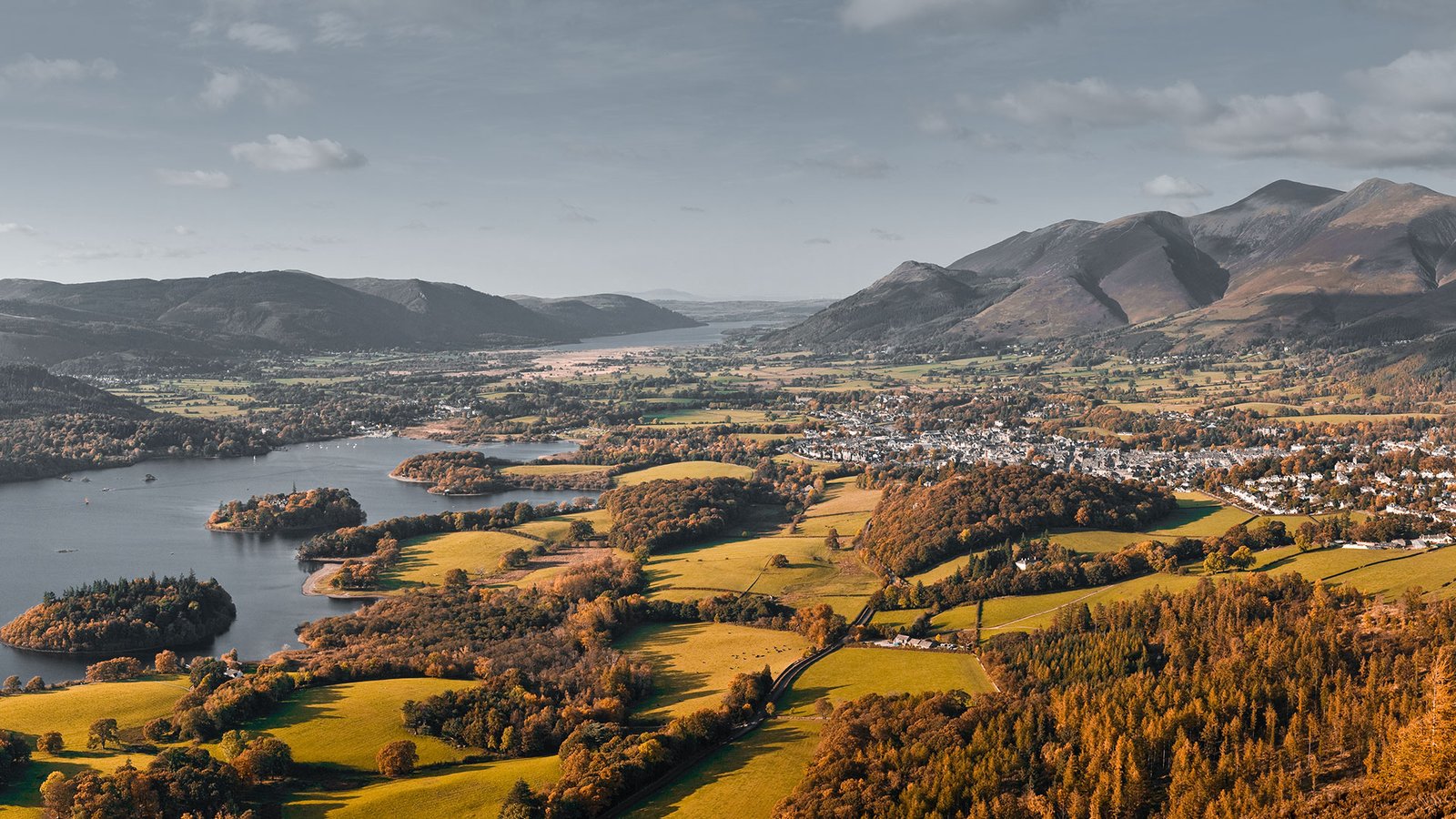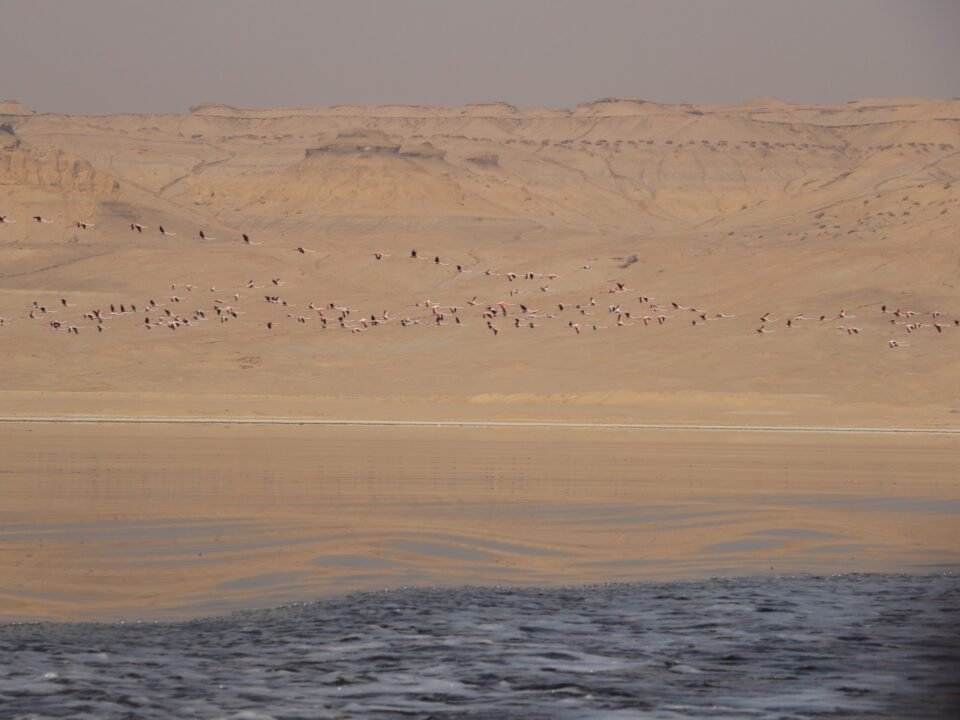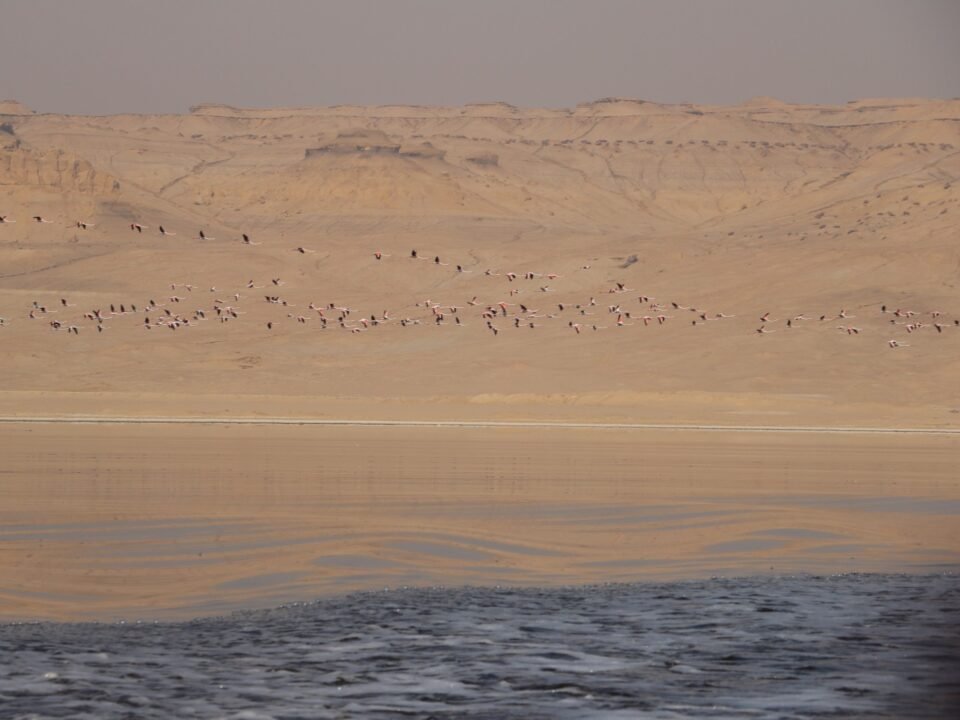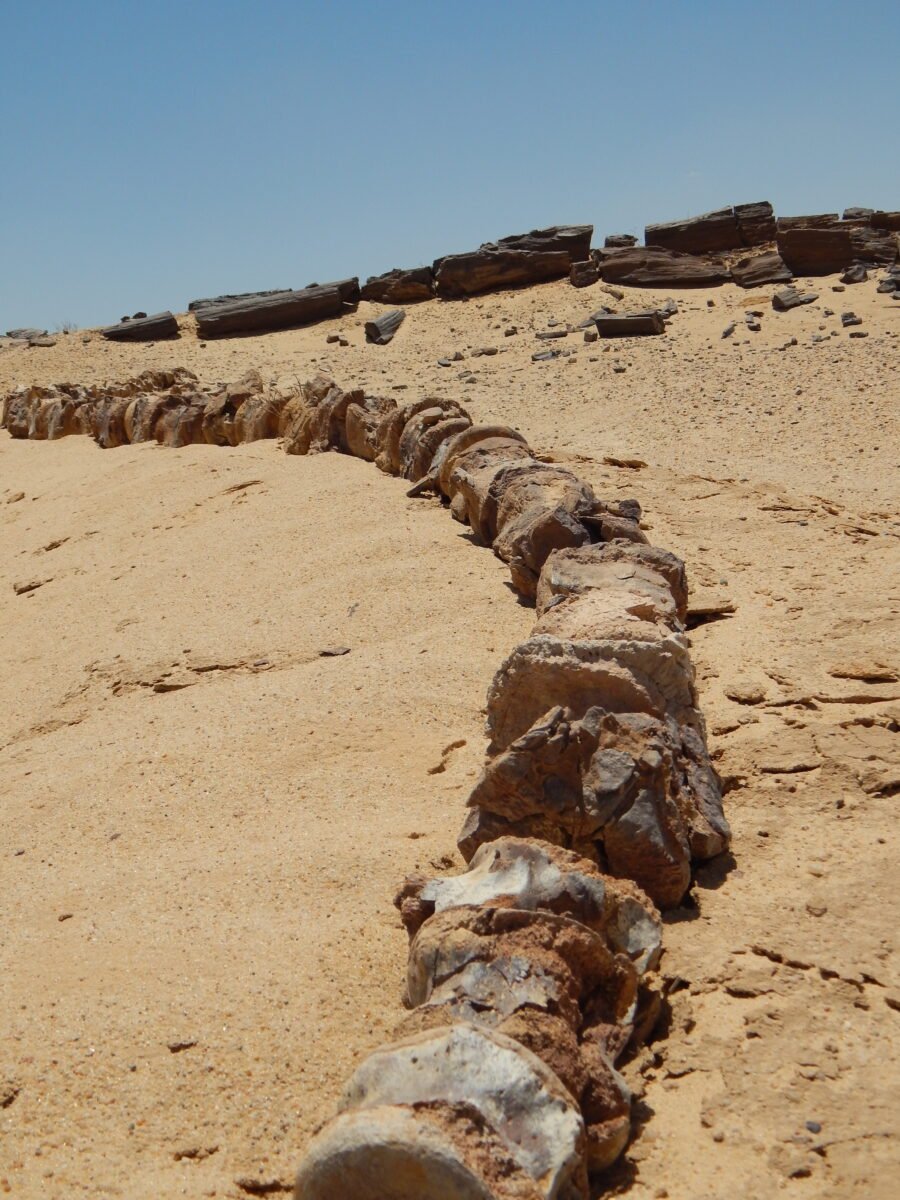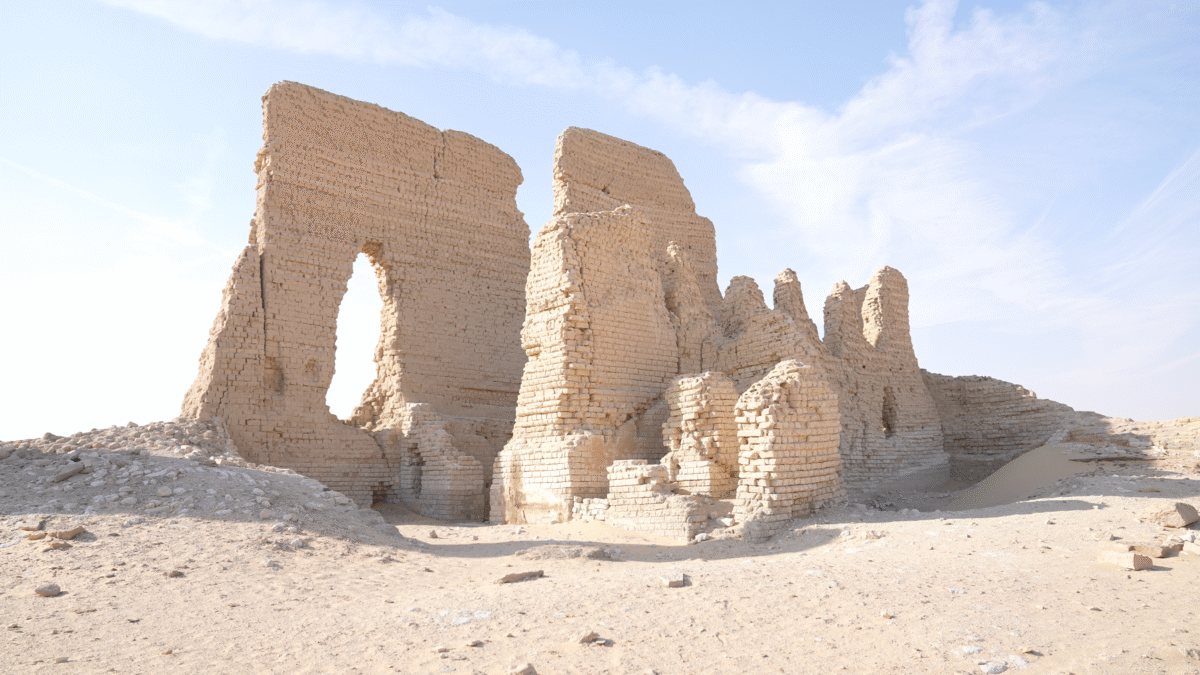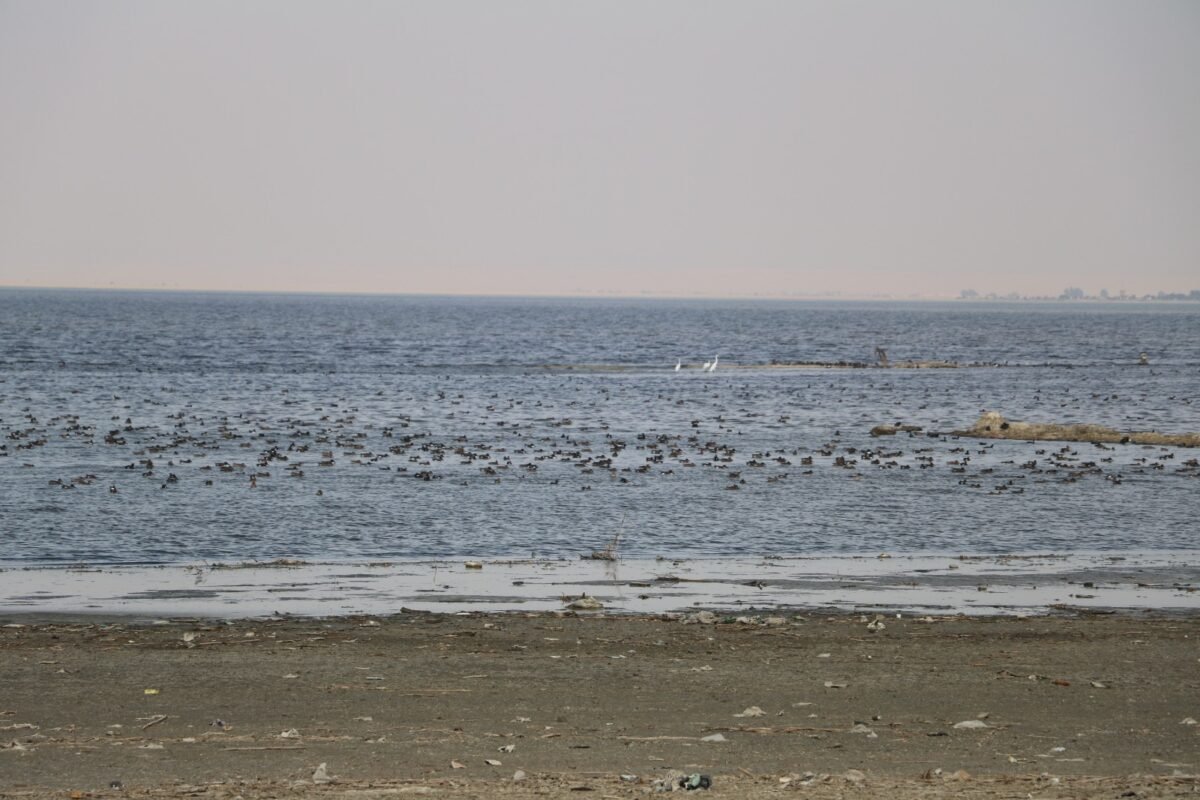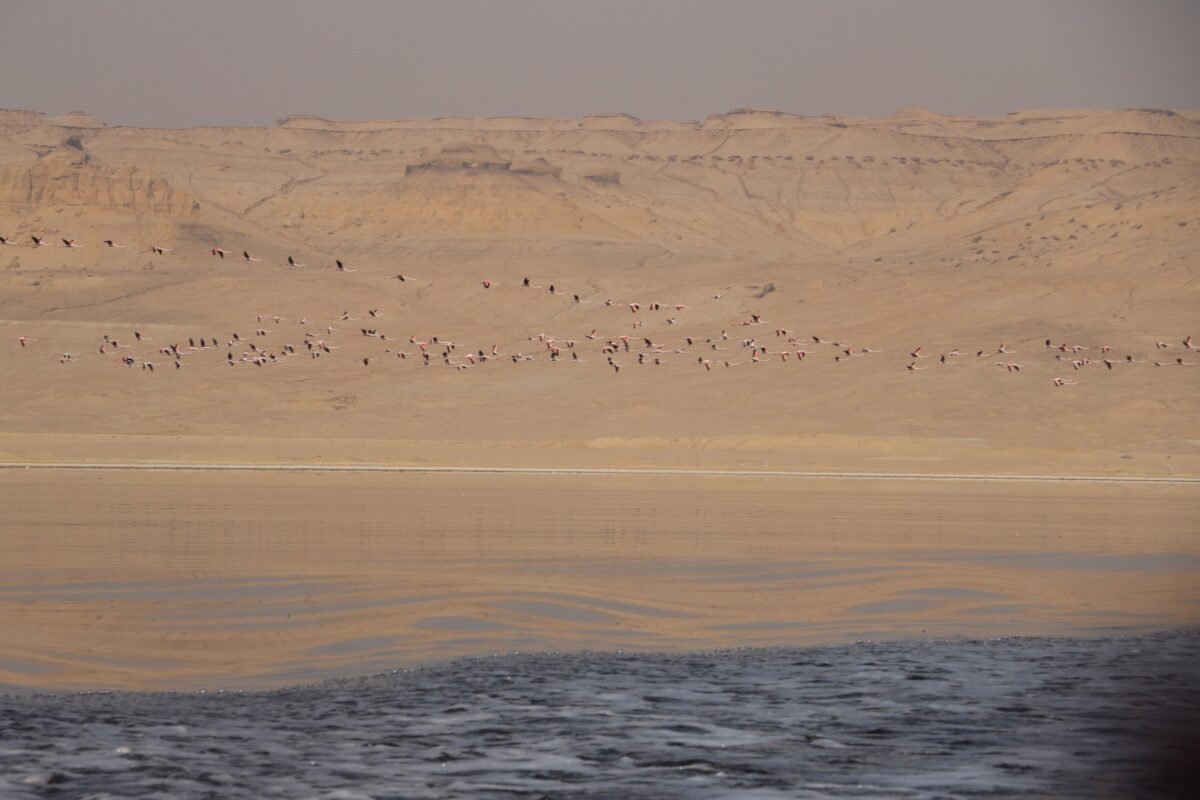


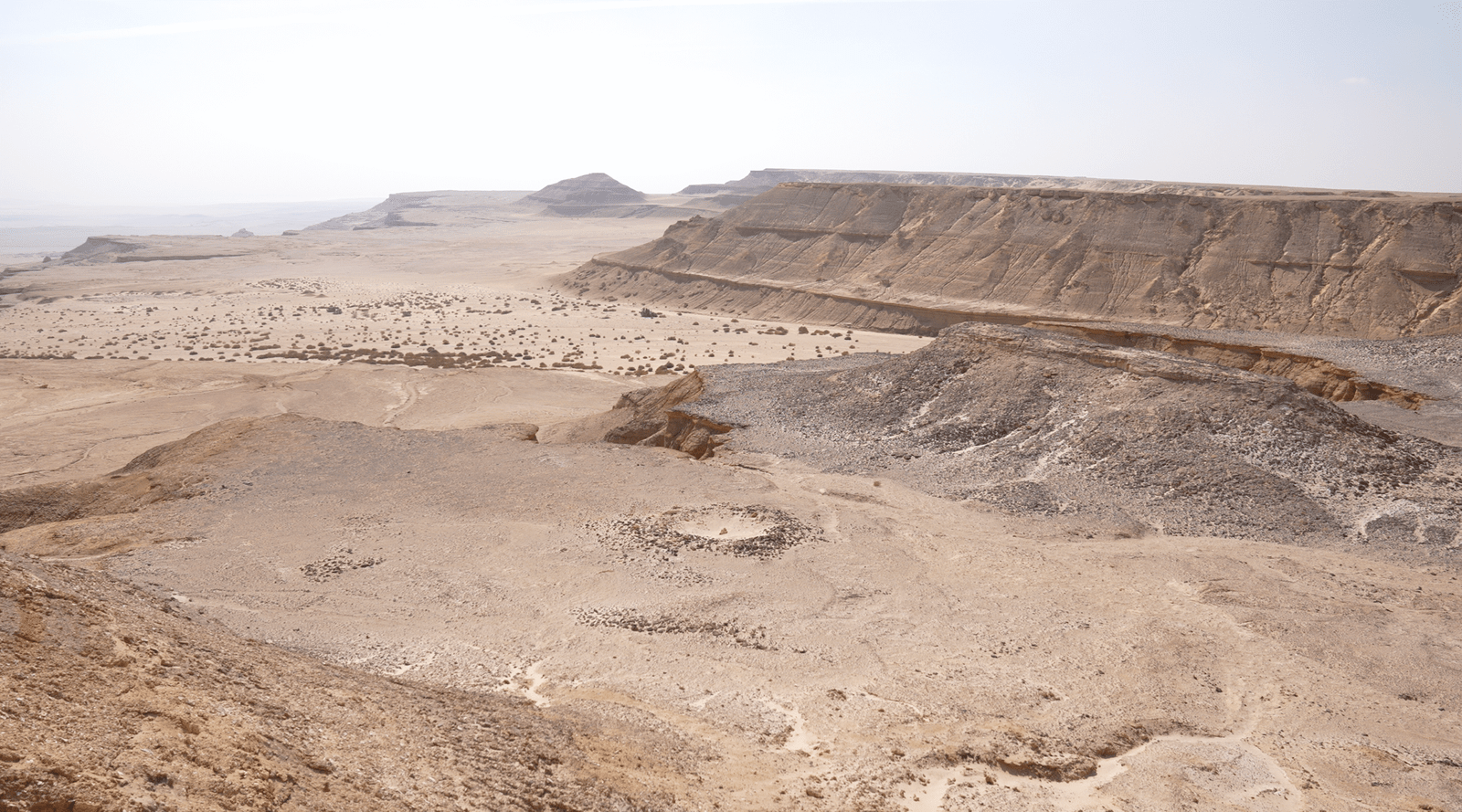
Gebel Qatrani area is distinguished by its globally unique natural heritage, unmatched anywhere else in the world. It contains fossils of terrestrial, marine, and riverine animals that remained after ancient environments changed, the sea retreated, river courses shifted, and climates transformed over vast ages. These fossils provide an exceptional historical record, telling the story of how life once thrived in these eras, what the climate was like, when and where the sea advanced and retreated, and which species lived in the sea, rivers, or on land. Such a complete and well-preserved record is rare on Earth, thanks to the diversity, abundance, and remarkable preservation of the fossils over the centuries.
If you let your imagination roam while reading the “science of the mountains,” you might picture this dry desert as a vast sea into which great river channels emptied. Trees would have grown along the banks, and numerous marine creatures—large and small whales—would swim near the shore. Dugongs, in their prime, grazed on seagrasses. If you looked closely, you might see turtles moving very slowly, laying eggs on the sandy beach, burying them, and returning to the sea as if escaping a lurking predator.
And imagine spotting a large four-legged animal with a big head, raised snout, and massive body, swimming near the shore and feeding on seagrass before returning to land—never straying far from the coast. You might think it is a hippopotamus, but no—it is the Moeritherium, the earliest known ancestor of modern elephants, first appearing in this region. Alongside it lived giant marine fish and sharks that would not hesitate to devour their prey. All around, beautiful seashells of various shapes and colors accumulated along the shores of this ancient sea.
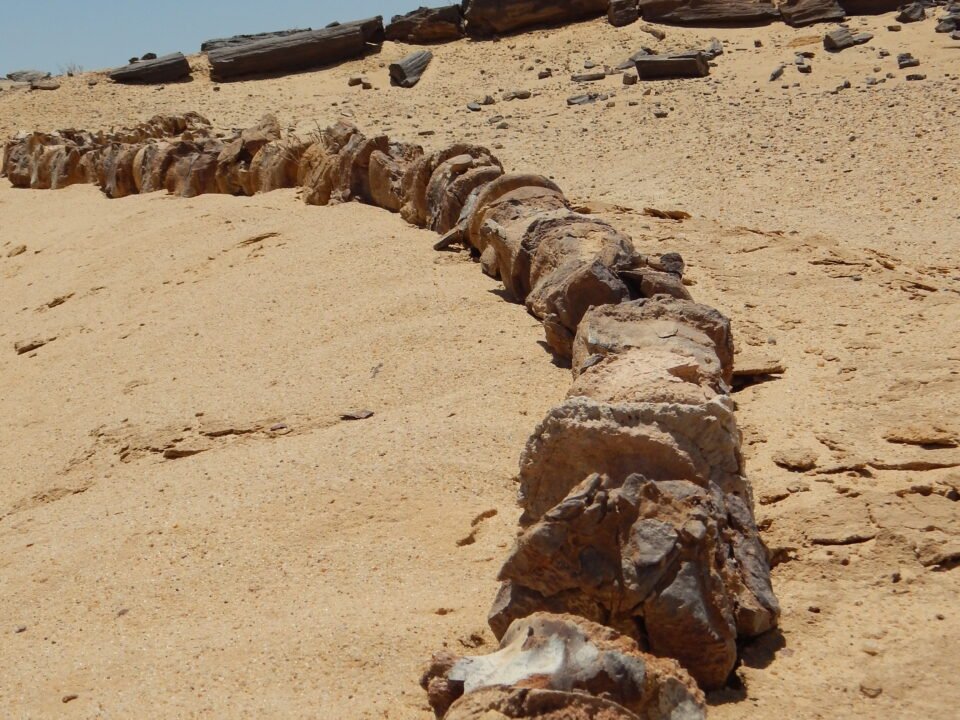
If you turned your gaze toward the river mouths flowing from the northeast of Egypt into this region, you would see them carrying heavy loads of silt and dissolved minerals into the sea and onto the land, fostering the growth of dense seasonal forests. These forests, with towering hardwood trees reaching up to 40 meters high and over two meters thick, stretched across vast distances. Walking among them, you would encounter animals unknown today—creatures unlike anything in our time.
You might see a massive beast resembling a modern elephant but without a trunk, instead sporting four horns—two large ones at the front and two smaller ones at the back. This was the Arsinoitherium, one of the strangest animals to inhabit the area. Nearby, another large animal, smaller than the Arsinoitherium, had a head extending slightly backward and the beginnings of a small trunk—this was the Phiomia, another ancestor of elephants after the Moeritherium.
Among the trees, you might spot unusually large rock hyraxes—some the size of a sheep. With caution, you could witness hyenas and wolves (different from those of today) stalking their prey. Monkeys of various shapes—different from modern species—climbed the trees and fed on fruits, the most famous being the Aegyptopithecus, or Egyptian monkey, alongside many other species.
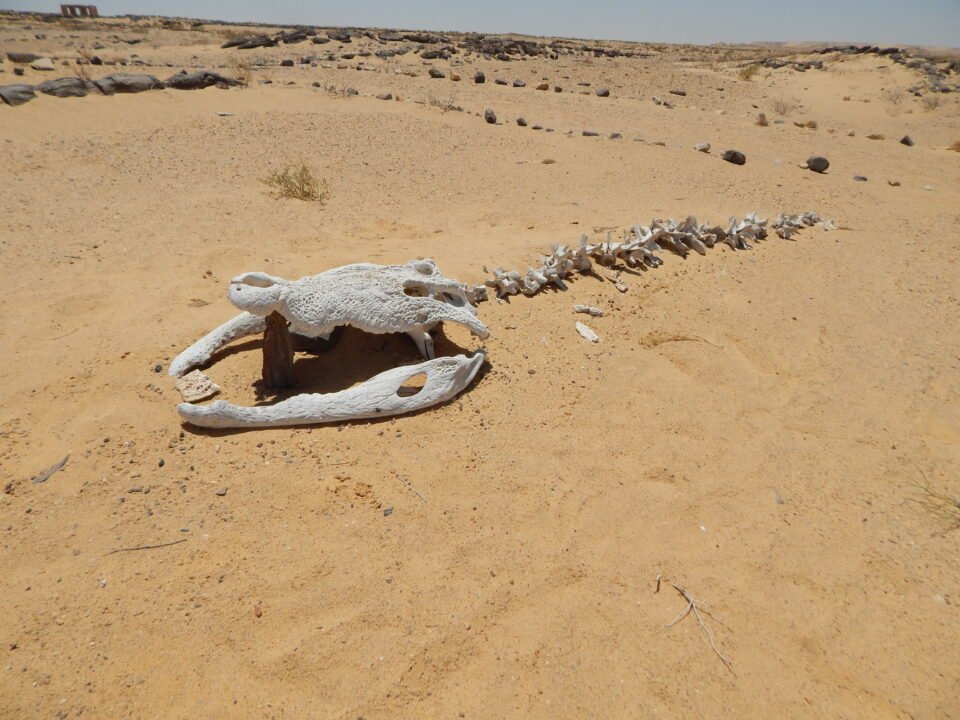
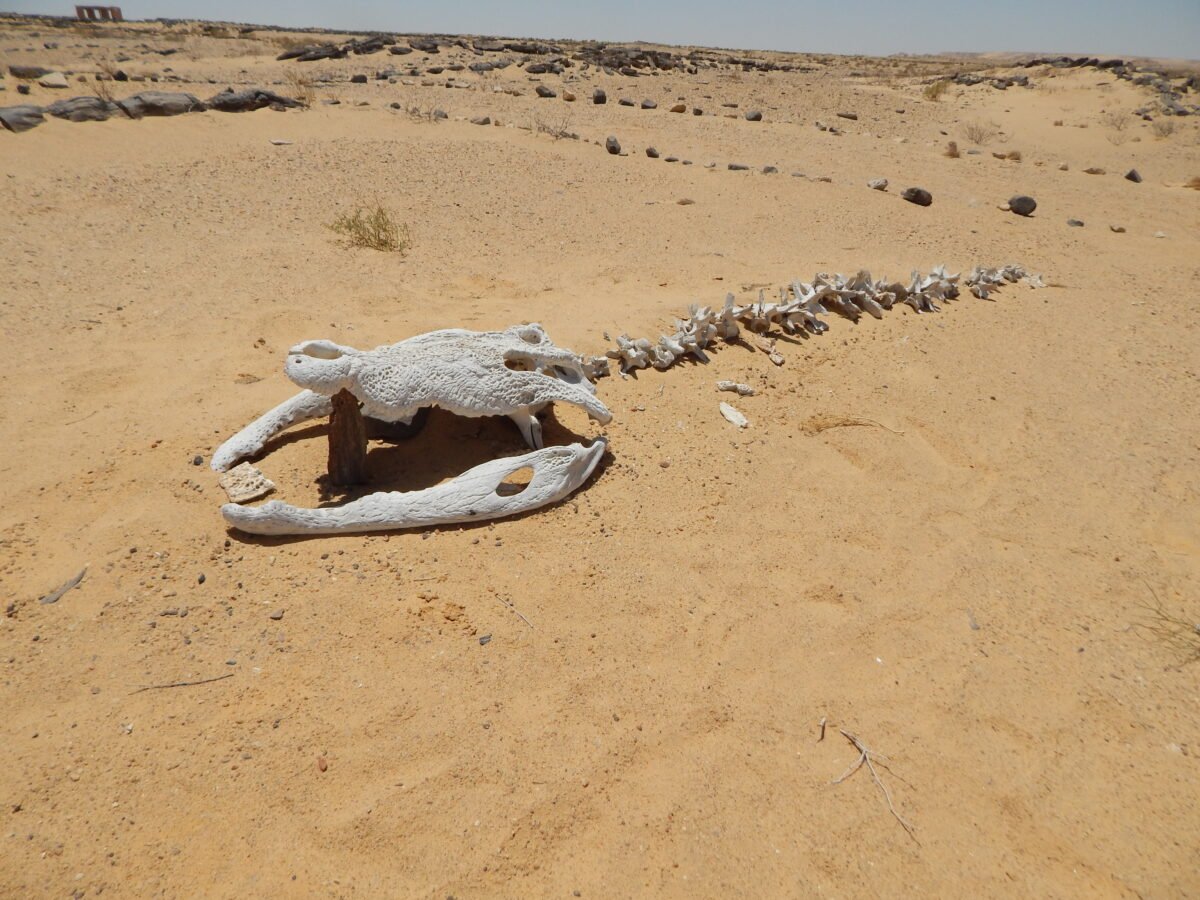
In smaller freshwater ponds near the river mouths, surrounded by tropical and subtropical trees, lurked giant crocodiles that devoured anything that came near. A spectacular sight was watching one seize a hyrax coming to drink, consuming its body but discarding the head. Beneath the forest canopy, turtles rested peacefully in their lush habitat, while in every direction, fascinating scenes unfolded—even columns of termites marching in orderly processions to gather food or clean their nests.
But then came long periods of harsh drought, casting a shadow over these thriving forests, killing most of the plants and animals except those that could withstand such conditions. Over time, floods from the northeast returned gradually, covering the remnants of drought, reviving the region with new forests and wildlife—only for drought and flooding to repeat over countless years. At times, the sea advanced inland, until this life finally vanished entirely about 30 million years ago.
Afterward, massive volcanic eruptions and devastating earthquakes struck, releasing molten basalt that covered the area, sealing this great geological record beneath a black rock layer. The name Gebel Qatrani comes from these dark basalt rocks.