


The Ancient Basalt Road – The Road to Eternity – (Cultural Heritage)
Deep in Egypt’s Western Desert, amid silent hills and endless sands, time reveals to us a road unlike any other—a path carved into memory, built of stone, and once trodden by the ancient Egyptians on their journey toward eternity. This is the Ancient Basalt Road—a geological and human passage linking mountain summits to the harbors of civilization.
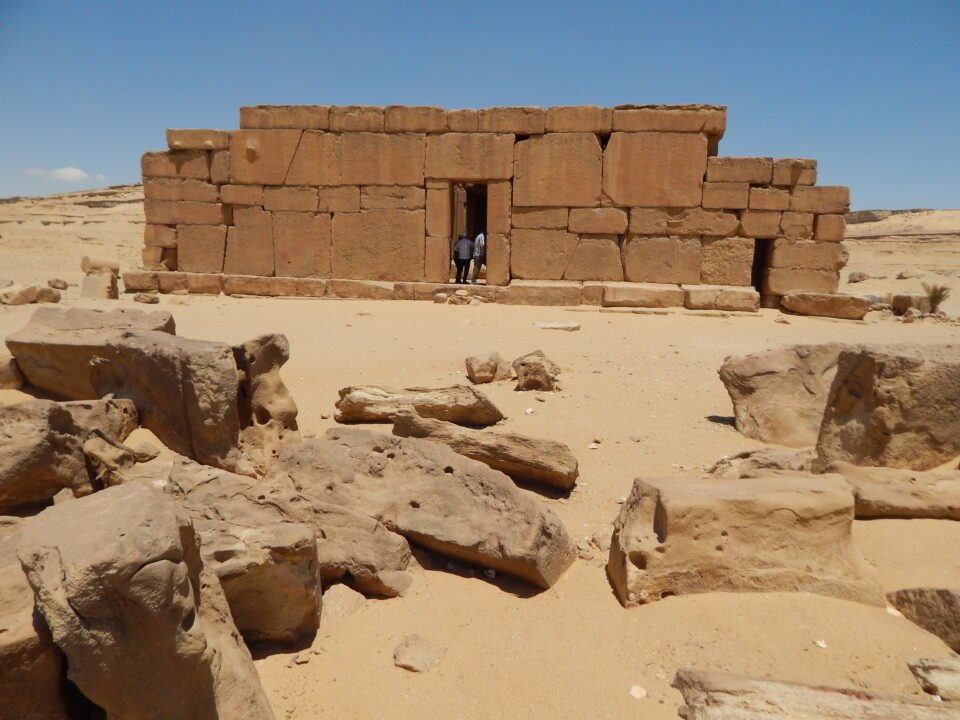
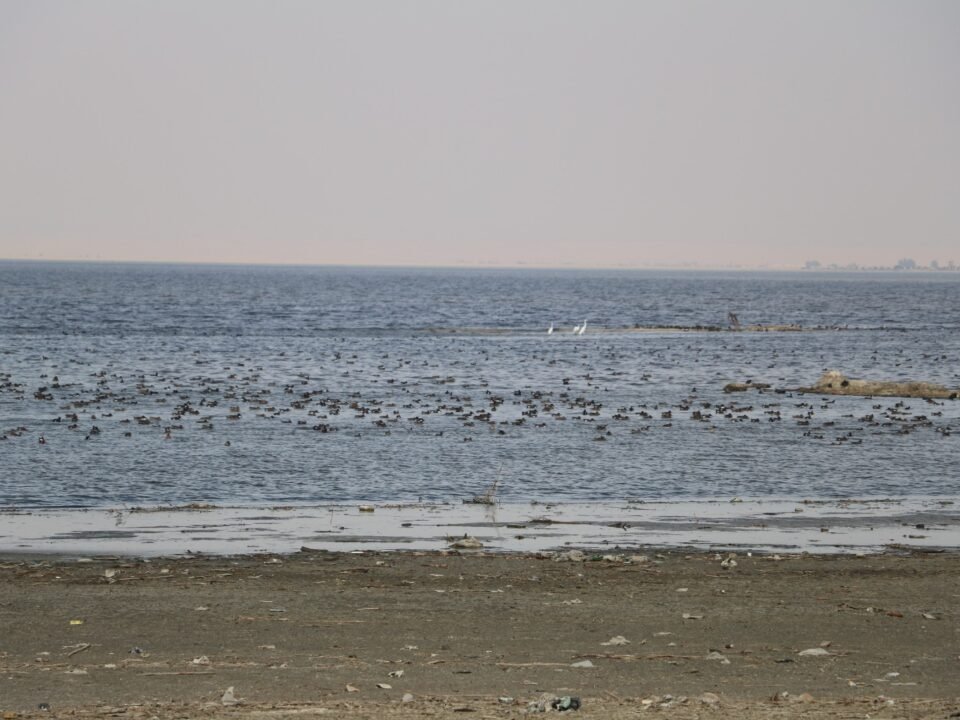
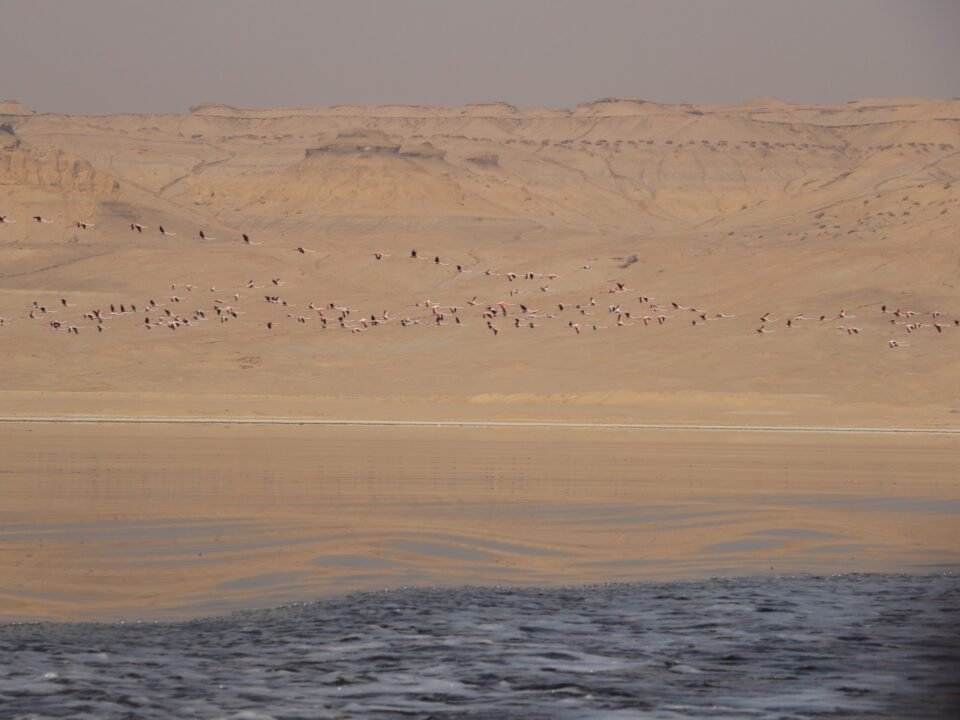
Basalt, the black volcanic rock, was formed around thirty million years ago during the Oligocene epoch, following intense volcanic eruptions that coincided with the early rifting of the Red Sea. The dark, imposing Gebel Qatrani became one of the most important sources of this unique stone in northern Egypt. Here, the ancient Egyptians meticulously planned an engineered route to transport massive basalt blocks from the mountain’s summit, down a carefully designed slope, to the area of Qasr El Sagha—home to the ancient harbor on the shores of Lake Moeris (modern-day Lake Qarun).
The blocks were rolled on wooden logs, acting as natural wheels, making use of the natural gradient between Gebel Qatrani’s summit—353 meters above sea level—and Qasr El Sagha, only 10 meters above sea level. From there, they began their waterborne journey, crossing the lake and then through a canal connecting to the Nile, all the way to the pyramids of Giza and Saqqara. There, they were used to pave the floors of tombs and temples, as the ancient Egyptians believed basalt would protect the bodies of the dead in the afterlife.
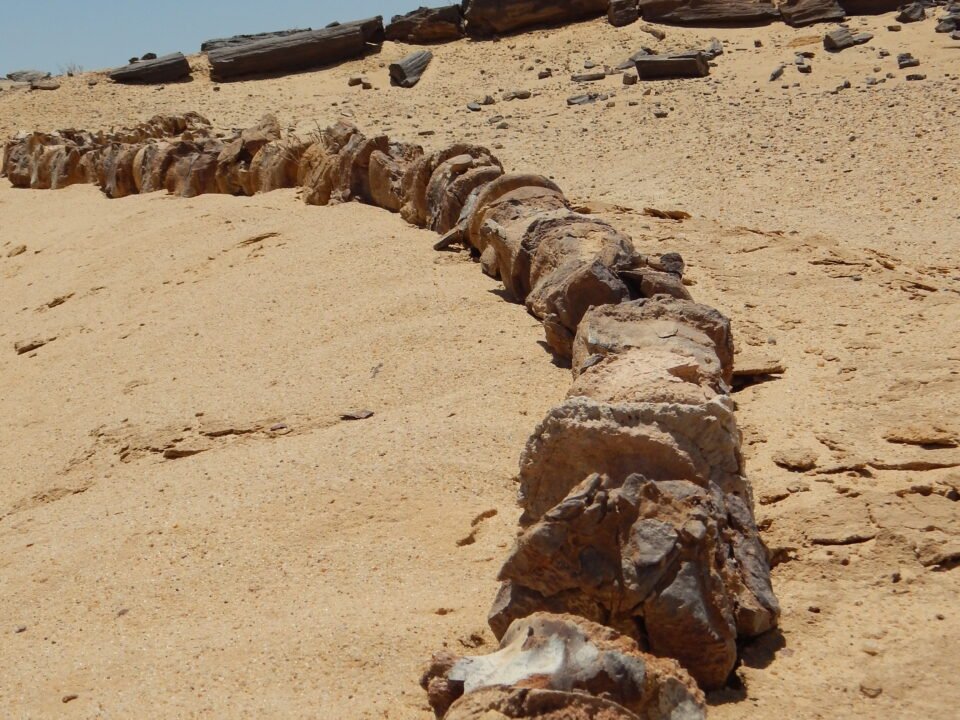
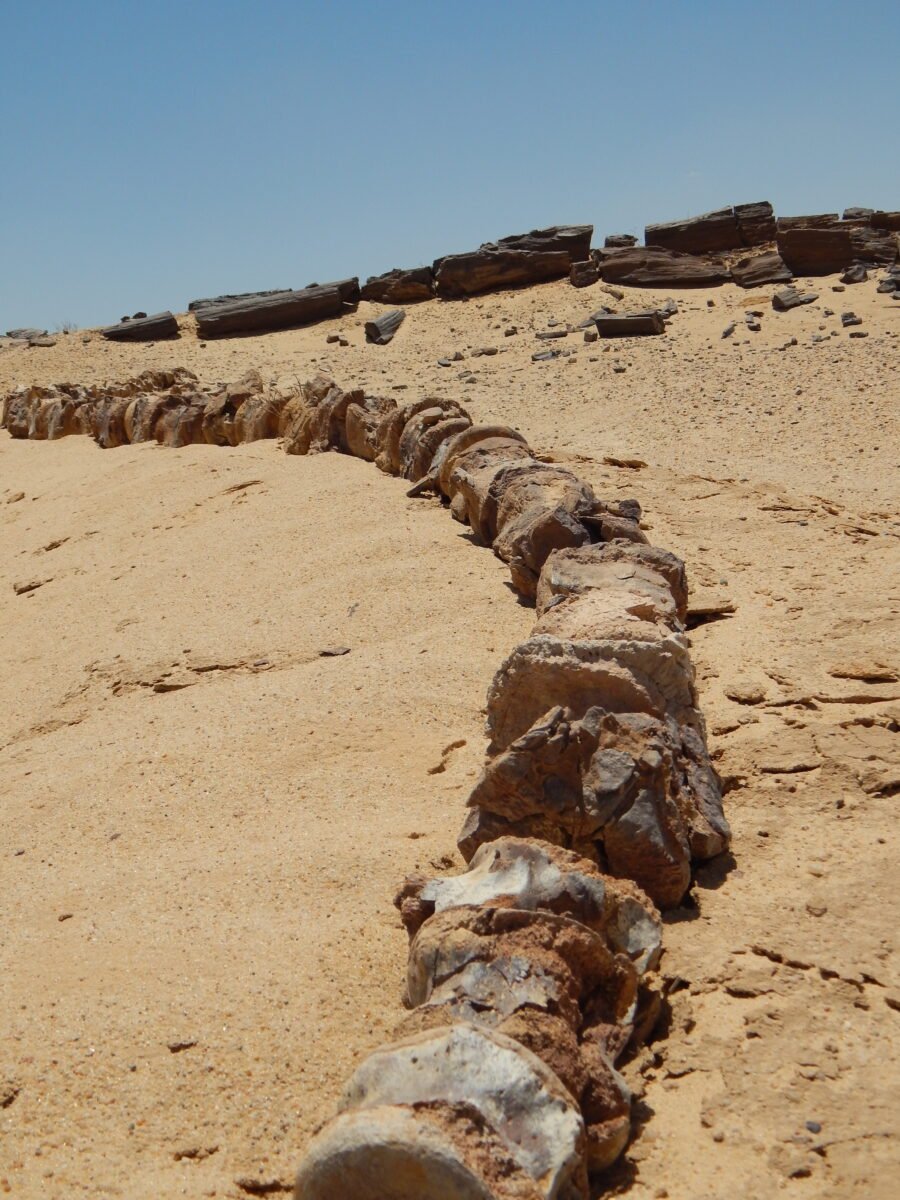
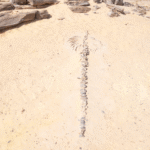
The road stretches for over 11 kilometers, with a consistent width of about 2.1 meters—exactly matching the width of the basalt slabs quarried from the mountaintop. Five main quarries were established on the summit, each with its own route, converging at a central point near the Widan El Faras area. Remarkably, parts of the road remain intact even after thousands of years, especially sections built with limestone and petrified wood, while others have eroded under wind and rain, exposing the sedimentary layers once shielded by basalt. Today, the road still rises about half a meter above its surroundings, a silent witness to its ancient grandeur.
The Basalt Road is more than an archaeological site—it is a story written in stone. It speaks of the intelligence, faith, and ingenuity of the ancient Egyptians, and of how they tamed nature to serve their beliefs and cultural legacy. A silent road… yet one that tells everything.