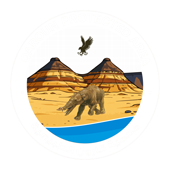


Qaroun Natural Reserve
Qaroun Natural Reserve is one of the protected areas declared by a decree of the Prime Minister in 1989. It is considered one of the most important nature reserves in Egypt due to its globally significant natural and cultural heritage. The reserve is uniquely distinguished by containing one of the world’s most important sites for vertebrate fossils, in addition to its stunning natural landscapes that narrate the history of several geological periods of the Earth—telling the story of more than 25 million years of the planet’s history.
The reserve also includes Lake Qaroun, one of the oldest natural saline lakes in the world, covering an area of 235 km². It hosts a large number of resident and migratory wild birds, as well as various economic activities such as fish farming, tourism facilities, and more.
Located southwest of Cairo, Qaroun Natural Reserve is among the most prominent nature reserves in Egypt.
The reserve spans approximately 1,385 km² and is divided into three main parts:
1. The Southern Part of the Reserve
This area lies parallel to the southern shore of Lake Qaroun, located within the reserve boundaries, stretching for about 60 km. It includes many tourist establishments such as:
Hotels: Auberge Hotel, Fayoum Armed Forces Hotel, Panorama Shakshouk Hotel
Tourist villages: Pearl Village, Dream Village, Duck Island Village, Jewel Village
Cafeteria: Jabal Al-Zeina Café
There are also numerous fish restaurants operated by local residents, as well as several residential villages, including Shakshouk (where the reserve’s office is located), Barish El-Bahariya, Al-Omda, Suleiman, and Abu Naama. These villages are home to a significant population, most of whom work in fishing, agriculture, and various other traditional crafts.
2. Lake Qaroun
One of the oldest natural lakes in the world, covering around 235 km².
It is a saline lake,
Contains two islands: Golden Horn Island and Hammoud Island,
It has high salinity,
Low fish productivity,
Hosts a large number of resident birds,
Attracts many migratory birds every year.
3. Gabal Qatrani (Qatrani Mountain)
Located in the northern part of Lake Qaroun, covering about 1,100 km², this area represents the most significant and largest part of the reserve. Gabal Qatrani is known for its breathtaking scenery, with colorful rock formations and stunning natural landscapes.
Gabal Qatrani holds two key aspects that give it global significance:
Geological Significance: It contains vast quantities of the rarest vertebrate fossils in the world, which are considered ancestors of most vertebrate animals globally.
Archaeological Significance: The area features several Pharaonic and Roman archaeological sites, along with ancient basalt and gypsum quarries, reflecting a long human history on Earth.
