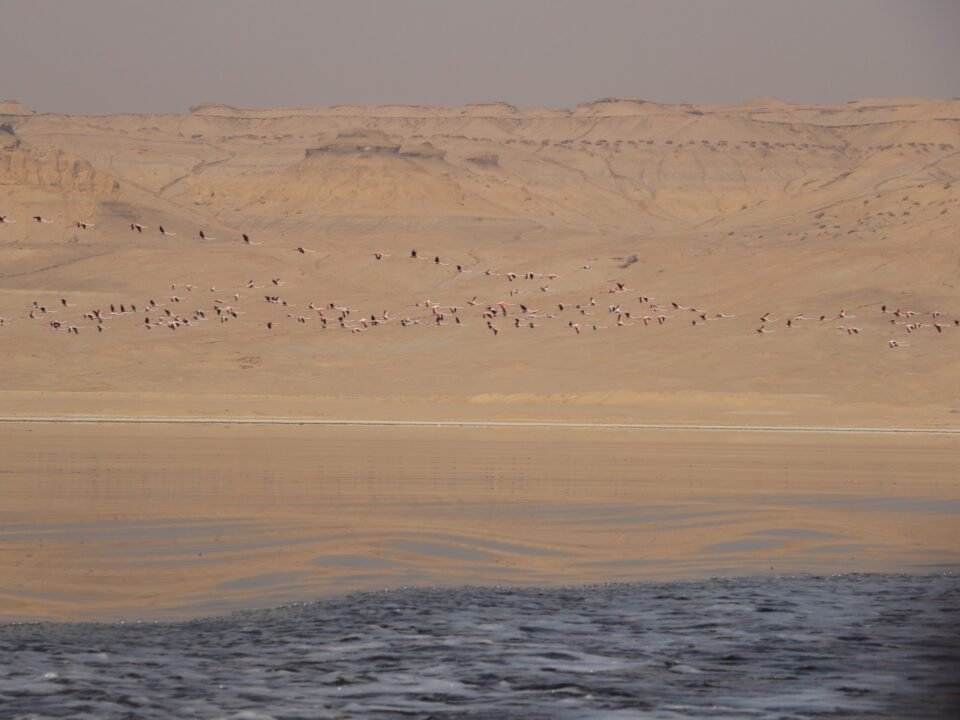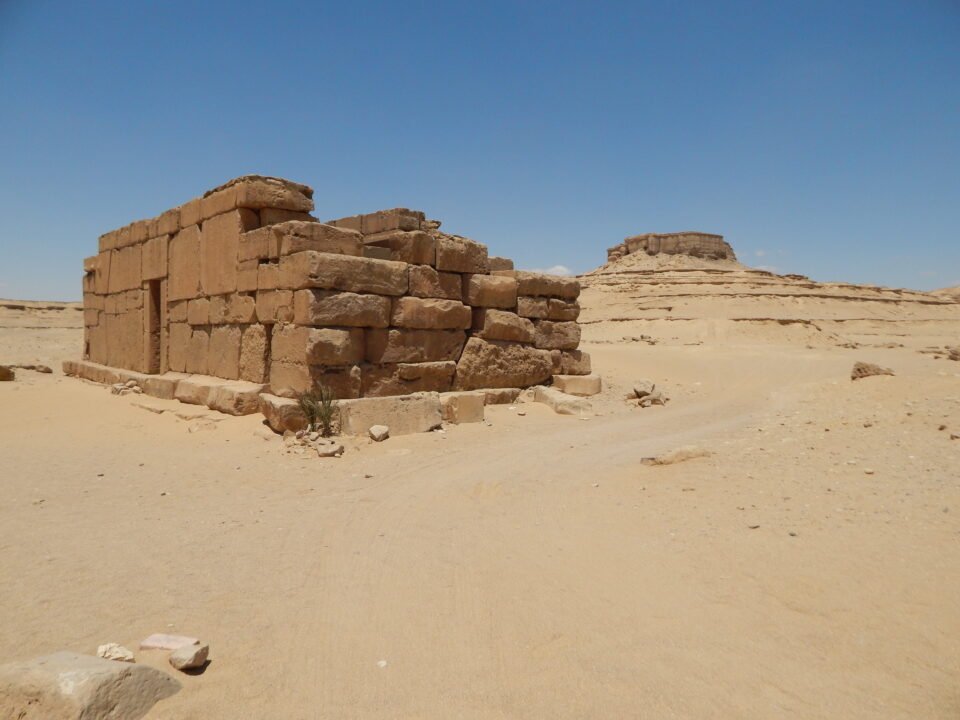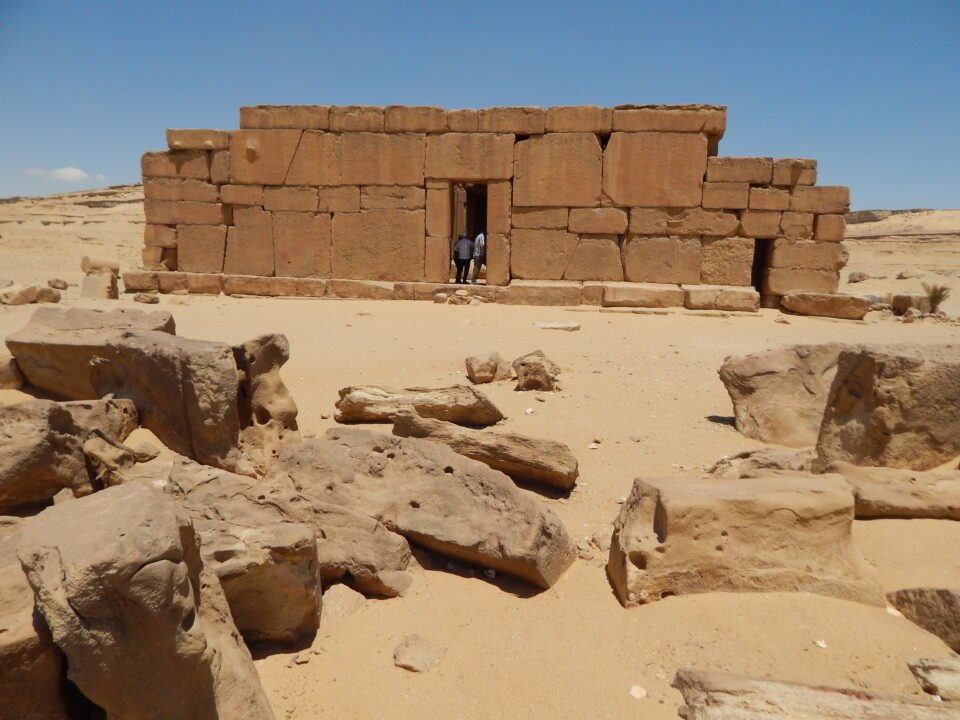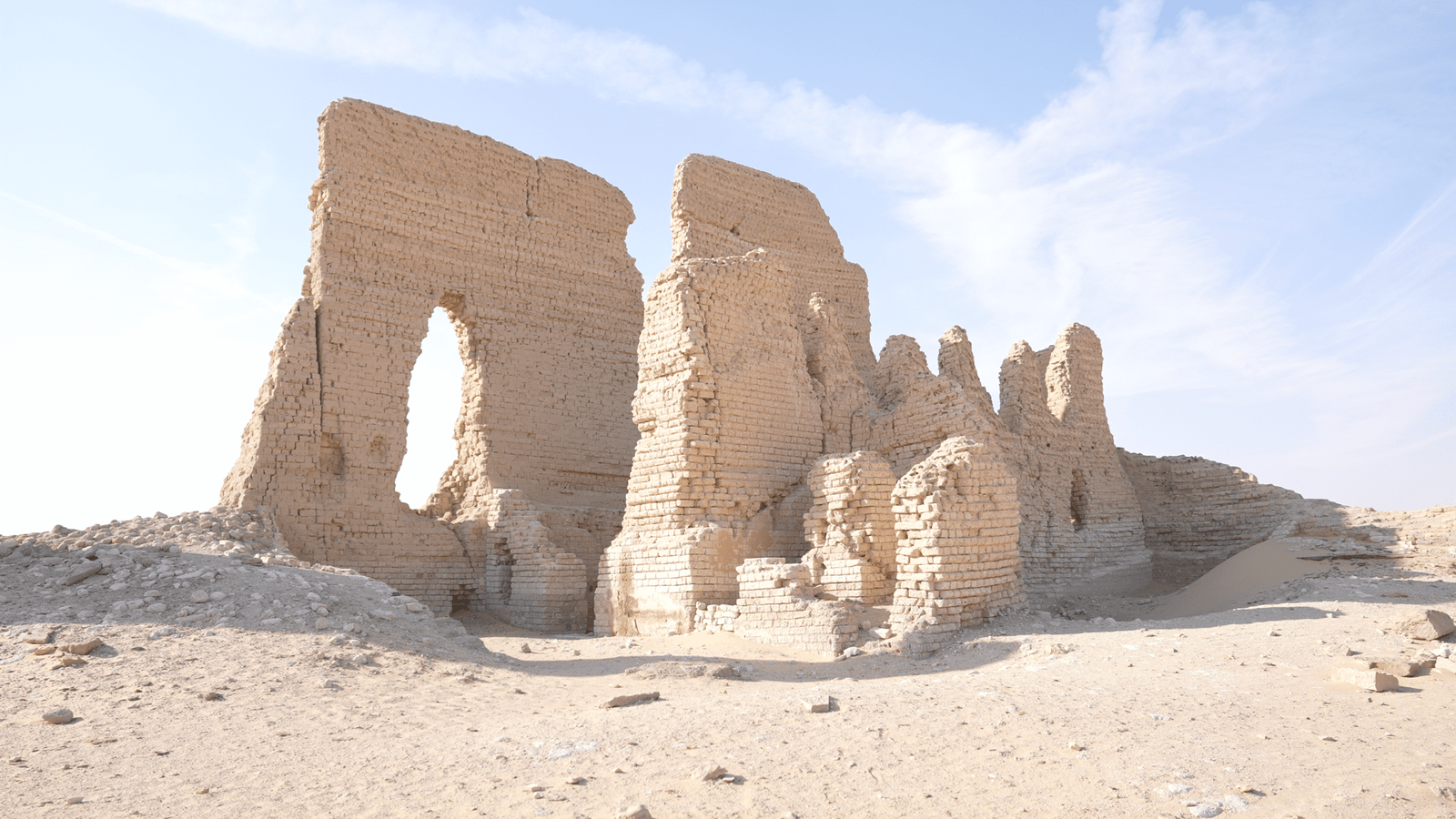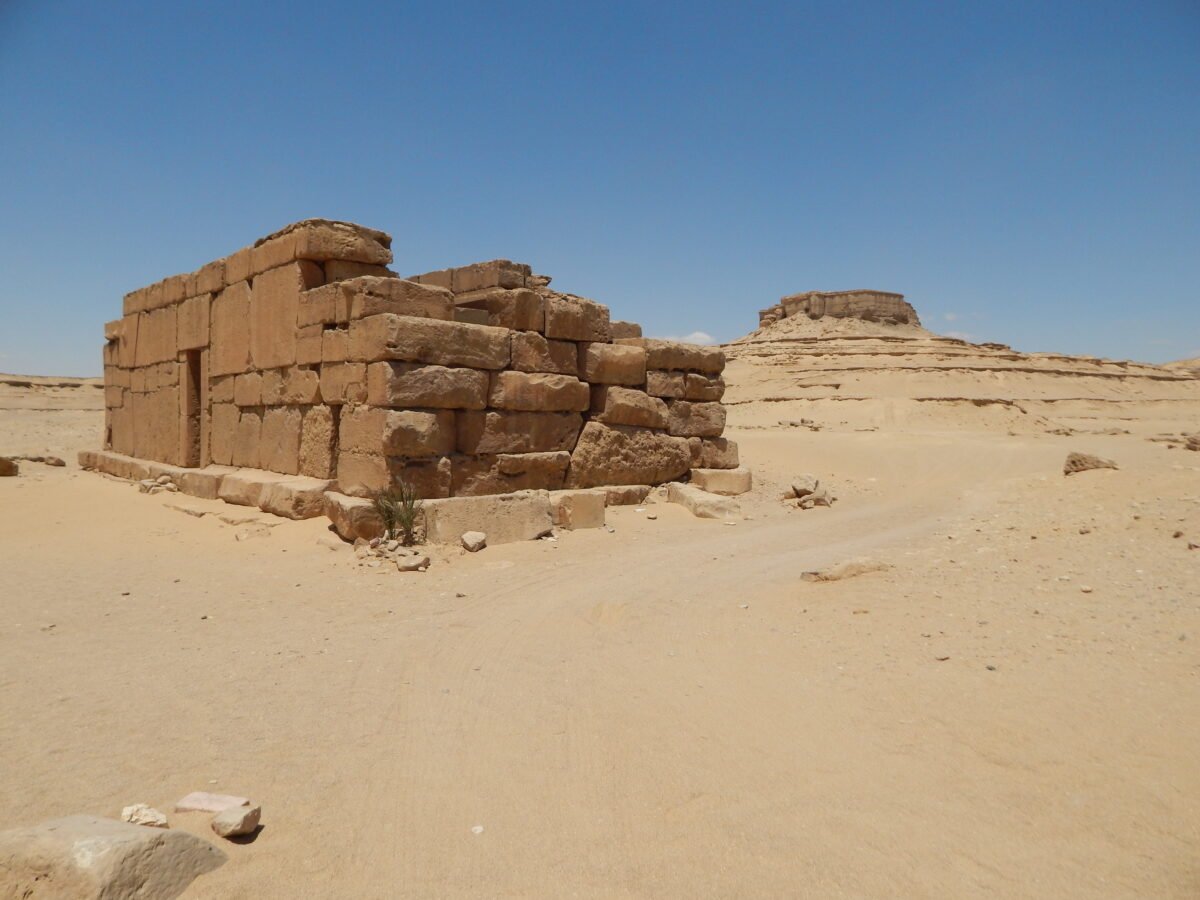


In the heart of the Fayoum Desert, Lake Qaroun shines as one of the oldest natural lakes in the world, dating back to the times of the Pharaohs, when it was known as “Mouris” and later as the Lake of the god Sobek. Today, this lake forms the core of Qaroun Protected Area, declared a reserve in 1989 covering over 1,380 km², with its boundaries adjusted by Prime Minister’s decree No. 3155 in 2019 to the current area of 1,300 km². It stands as a unique model combining geological heritage and biodiversity.
-
Gebel Qatrani: A Natural Archive of Ancient Ages
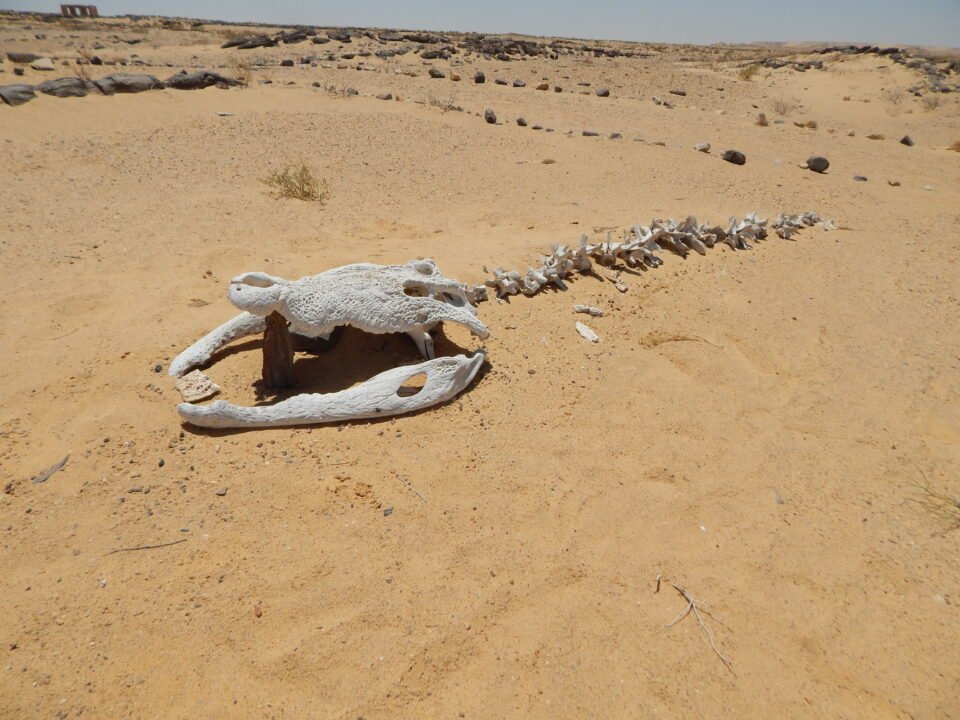
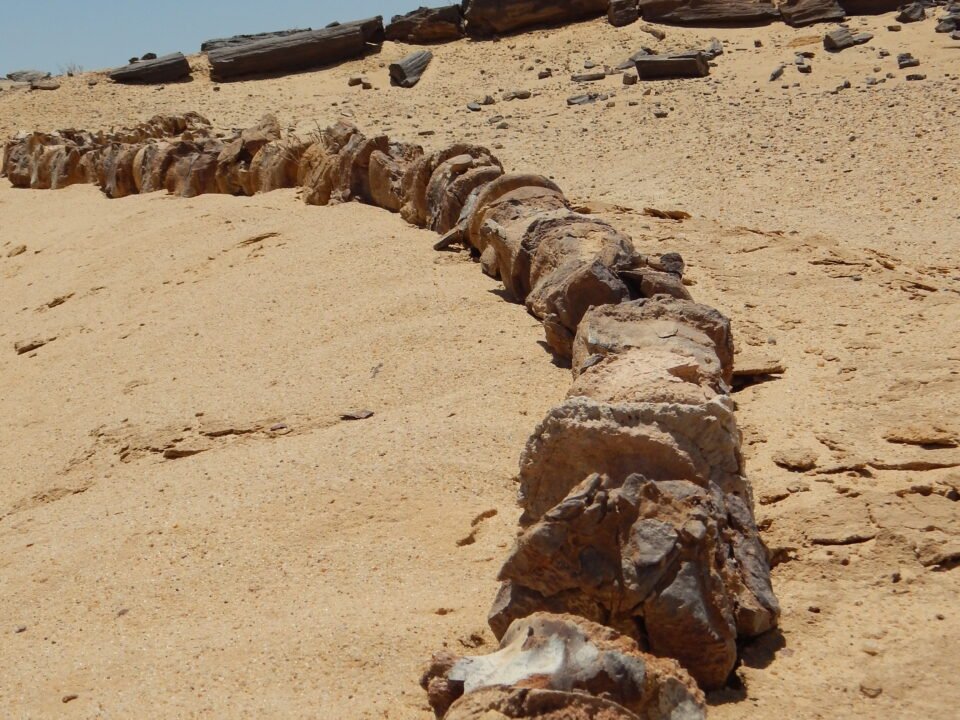
The northern part of the lake houses Gebel Qatrani, home to some of the most important fossils in the Middle East, including:
-
The oldest known primate worldwide (Aegyptopithecus).
-
Fossils of ancestors of elephants, hippos, sharks, and dolphins.
-
Remains of petrified trees documenting the environmental transition from tropical forests to desert.
-
An International Station for Migratory Birds
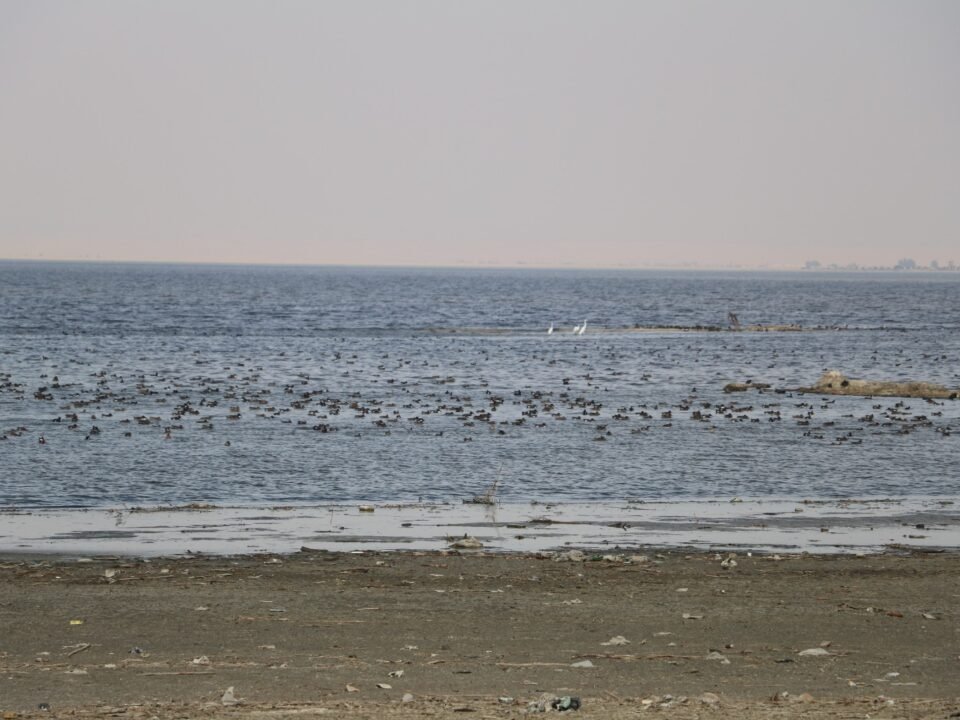
Lake Qaroun lies on the African-Eurasian migratory bird flyway, making it a Ramsar-listed site.
214 bird species have been recorded here, including:
-
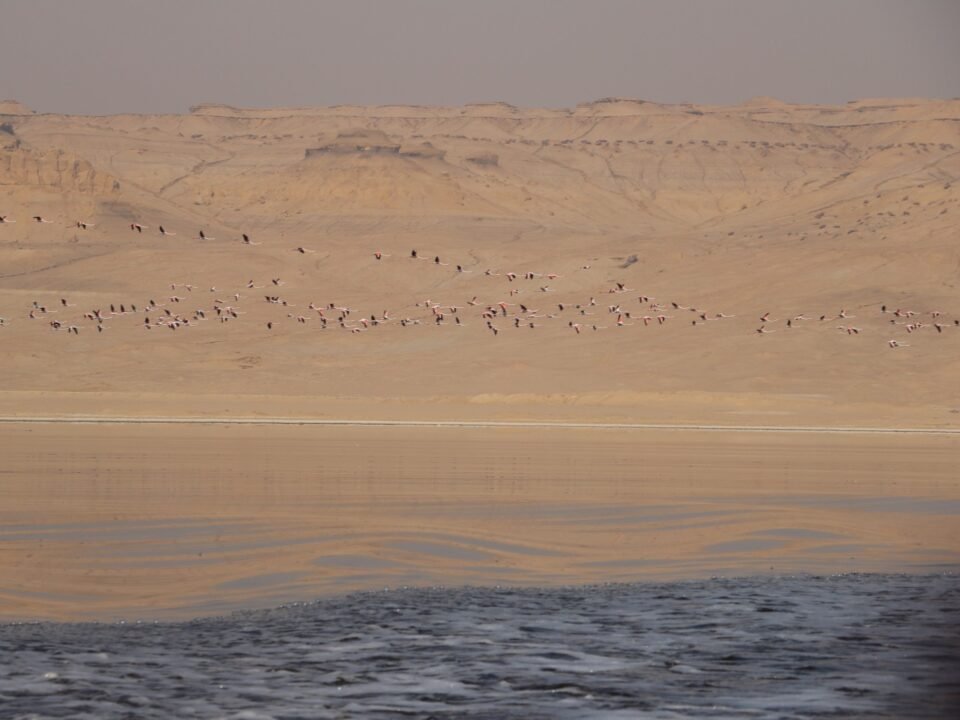
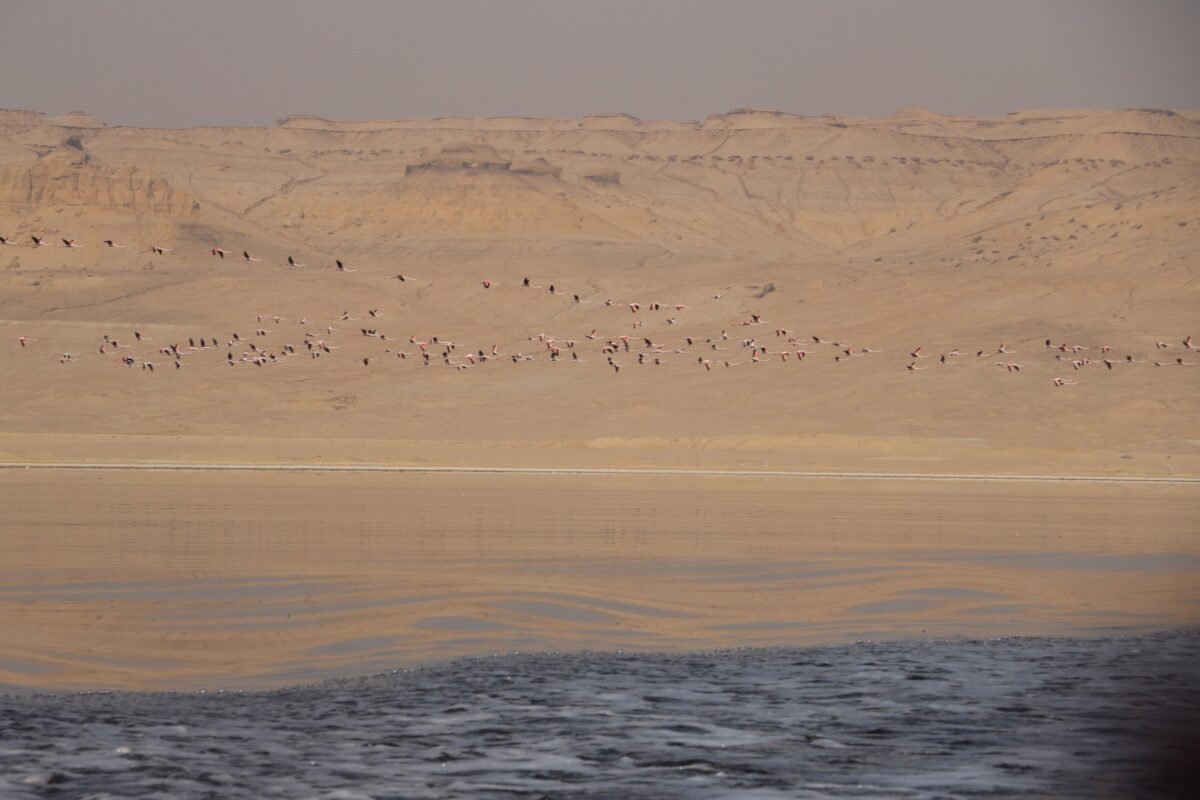
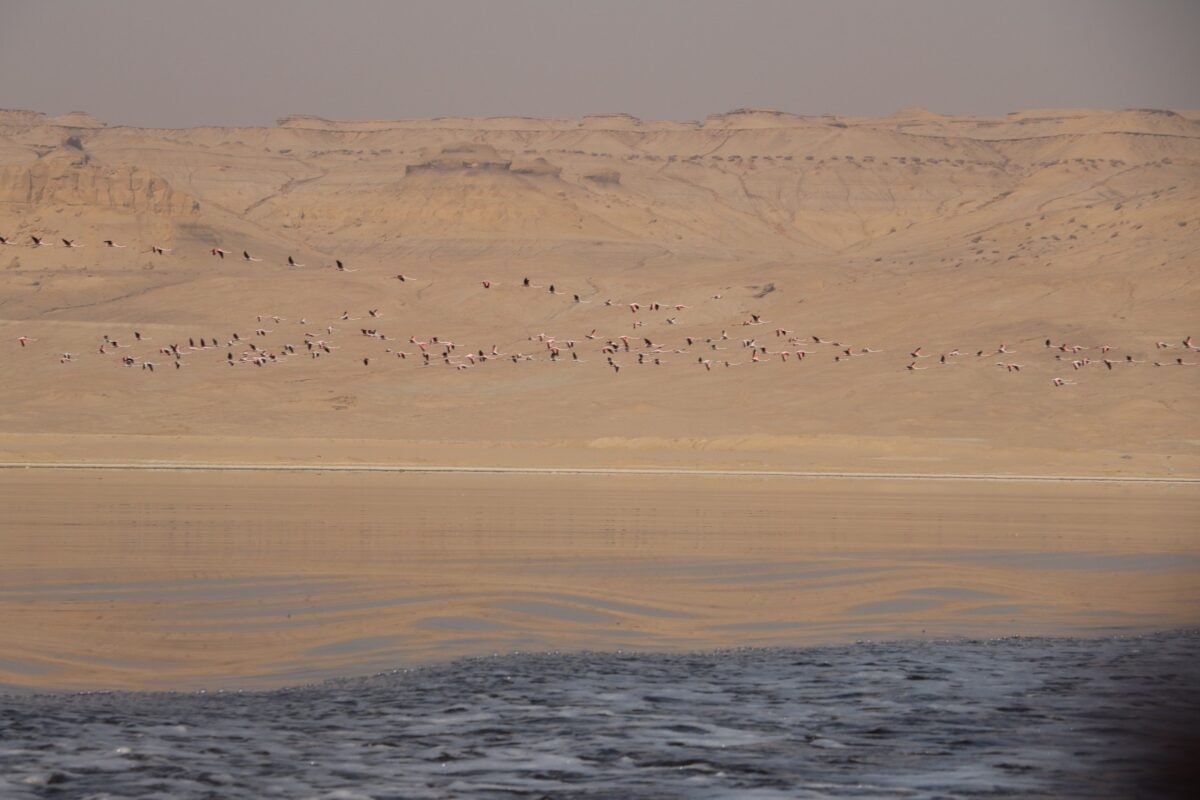
Migratory birds (seasonal between October–March): flamingos, green-winged teal, imperial eagle, peregrine falcon, wagtail.
-
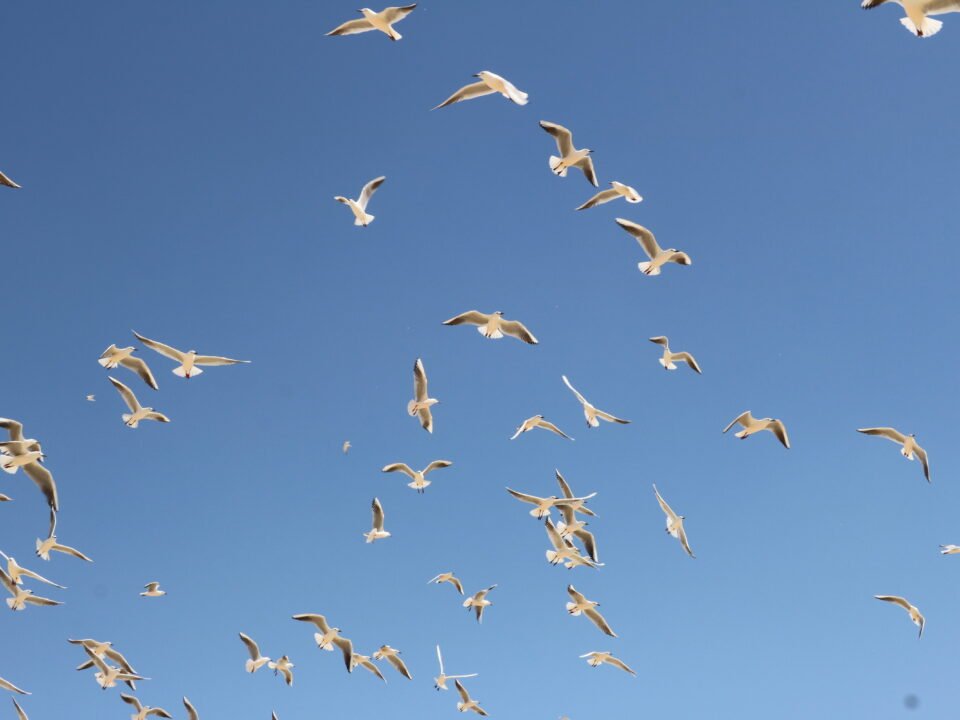
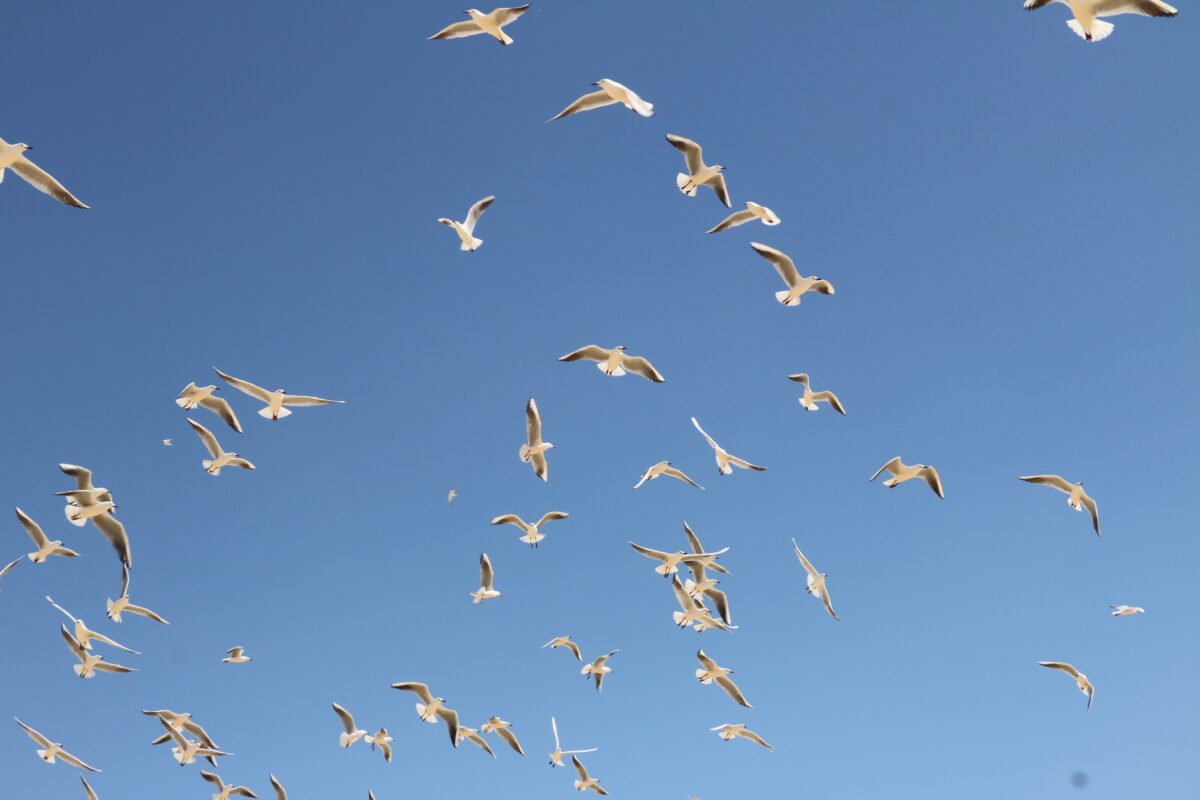
Resident birds: gulls, herons, cormorants.
-
A Water System Adapted to Salinity
Despite high water salinity, the lake supports remarkable aquatic biodiversity:
-
Tilapia: fry grow in the lake and need about three months to reach market size.
-
Mullet and Moses fish: adapt well to salinity.
-
Shrimp: contribute to the food chain for birds and humans.
These species play a pivotal role in maintaining the lake’s ecological balance.
-
Salt Flats and Marshes: Rich Habitats Around Lake Qaroun
The surrounding salt flats and marshes support broad environmental diversity:
-
Halophytic plants like reeds and saltbush purify the water and provide shelter for birds.
-
The flats are ideal breeding grounds for crustaceans.
-
The Golden Horn Island (~55 acres): an important habitat for breeding wild birds and a highly sensitive ecological site.
-
Eco-tourism: A Sustainable Experience
The reserve supports sustainable eco-tourism through:
-
Wooden observation towers designed for birdwatching without disturbing wildlife.
-
Designated trails for visitor movement.
-
Training of local eco-tourism guides for educational tours.
-
An Egyptian-Dutch project developing sustainable ecological paths.
Conclusion
Lake Qaroun is not just a lake but a complete ecosystem that resists environmental challenges with unique resilience. Every element — from tilapia to flamingos, halophytic plants to visitors — contributes to a delicate life equation worthy of protection.
Visiting the reserve is a direct contribution to preserving one of Egypt’s oldest and richest ecosystems.
Qaroun Protected Area — Where the Earth Speaks the Language of Life.